Telling the truth has become a revolutionary act, so let us salute those who disclose the necessary facts.
27 Nov 2025
Alzheimer's Disease: The Most Common Neurodegenerative Disease - Here Are The Causes
The brain changes long before cognitive or behavioral symptoms appear.
Authored by Mercura Wang:Alzheimer’s
disease is a progressive neurological disorder that gradually destroys
memory, thinking skills, and the ability to perform everyday tasks. As
the single most common neurodegenerative disease, it affects more than 6
million Americans—most of them age 65 or older. The disease is
irreversible and fatal.
It often begins subtly—years before it’s diagnosed—showing up as everyday lapses that are easy to brush off.
What Are the Early Signs and Symptoms of Alzheimer’s Disease?
Alzheimer’s symptoms develop differently depending on when the disease begins.
There
are generally two types: early-onset Alzheimer’s, which develops before
age 65, and late-onset Alzheimer’s, which occurs afterward.
Early-onset
Alzheimer’s accounts for about 5 percent to 6 percent of cases, often
has a stronger genetic link, progresses more quickly, and may start with
problems in thinking, language, or vision rather than memory alone,
making it harder to diagnose initially.
Late-onset Alzheimer’s,
which starts after age 65, typically begins with gradual memory loss and
progresses slowly through predictable stages.
The following five stages describe the progression of late-onset Alzheimer’s, the most common form of the disease.
1. Asymptomatic Stage
Biological
changes characteristic of Alzheimer’s disease are present long before
cognitive or behavioral symptoms appear. This stage may last for years
or even up to two decades.
2. Early Stage
Early-stage
Alzheimer’s disease is characterized by mild symptoms that may resemble
normal aging difficulties. People at this stage are typically aware of
their condition and remain largely independent, able to drive, work, and
engage in daily activities with minimal assistance.
Common warning signs include:
Frequently misplacing items and being unable to retrace steps
Confusion about time, dates, or familiar places
Difficulty with planning or organizing
Trouble learning new information or maintaining focus
New challenges in finding the right words in conversation or writing
Difficulty interpreting visual information
Personality or emotional changes
3. Middle/Moderate Stage
This
stage is marked by more noticeable symptoms. Memory and cognitive
abilities continue to decline, and people often require greater
supervision and assistance with everyday activities, although some
mental clarity remains. This stage can persist for many years.
Common symptoms include:
Difficulty performing daily activities, including dressing, driving, reading, or writing
Trouble remembering recent events or important personal experiences
Confused speech or incorrect word use
False beliefs or hallucinations
Mood changes, including depression, agitation, or aggressive behavior
Withdrawal from social interactions
Repetitive or compulsive actions
Sleep disturbances
Impaired spatial awareness
4. Severe/Late Stage
This stage is characterized by profound cognitive and physical impairment, requiring constant assistance with daily activities.
Common symptoms include:
Severe memory loss, including the inability to recognize family members or familiar faces
Loss of the ability to communicate
Loss of bladder and bowel control
Difficulty swallowing
Progressive weakness and reduced mobility
Potentially violent behavior
Unintentional weight loss
Recurrent infections
Episodes of delirium
5. End-of-Life Stage
During
this stage, the person is in the final months of Alzheimer’s disease
and loses all functional independence. Cognitive decline is severe,
requiring round-the-clock care, with a focus on palliative support and
maintaining comfort and quality of life. Ultimately, the condition can
lead to coma and death, often as a result of infections or organ
failure.
Signs of Rapid Decline in Alzheimer’s Disease
Rapidly
progressive Alzheimer’s disease is a recognized clinical subtype of
Alzheimer’s distinguished by unusually fast cognitive deterioration and a
markedly shorter survival. It often advances over months to a few
years, with people showing steep declines in global cognition and daily
functioning.
What Causes Alzheimer’s Disease?
Alzheimer’s
is a complex condition resulting from multiple interacting processes in
the brain. Its causes have always been considered a set of hypotheses.
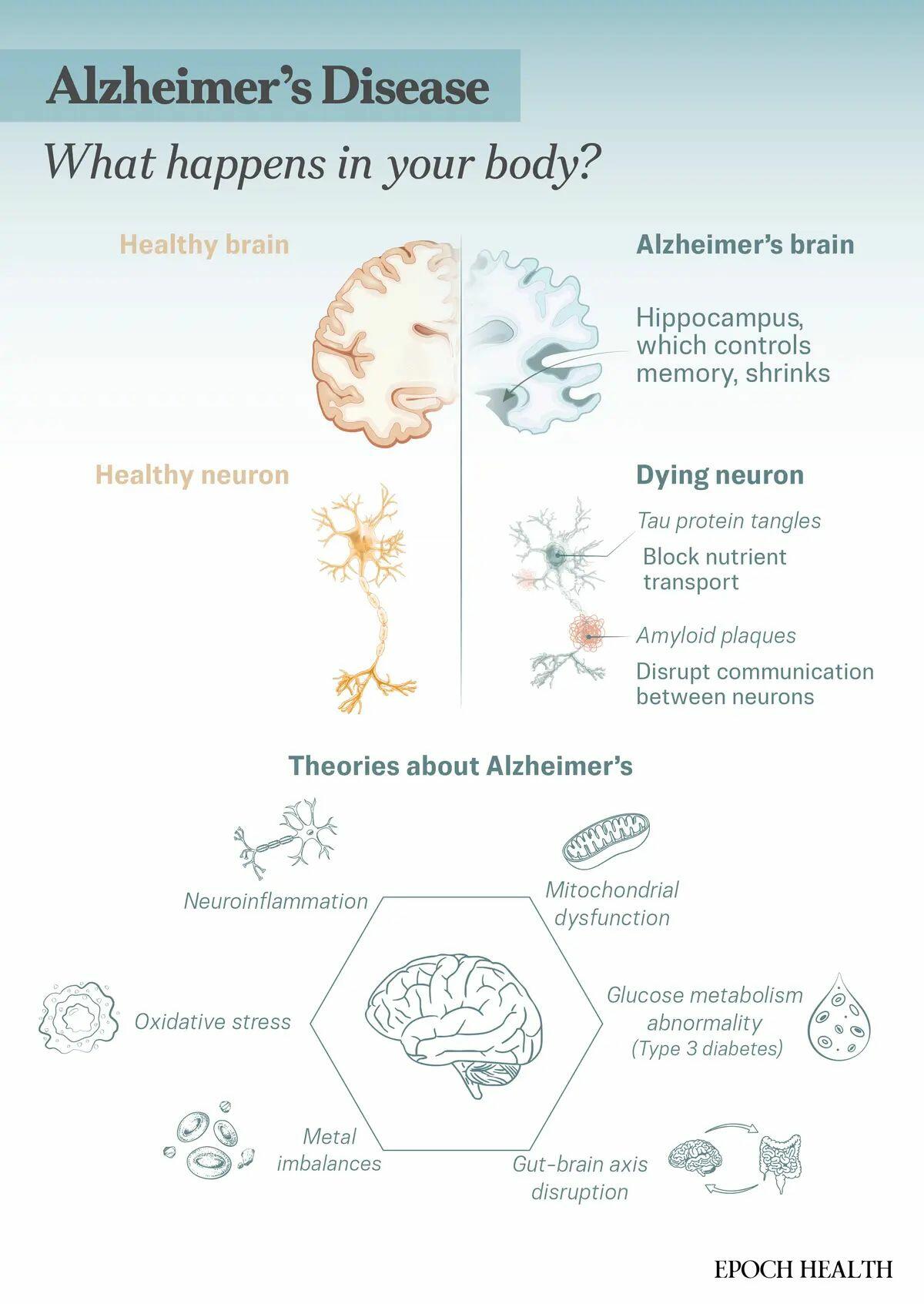
A
common hypothesis is that the disease involves abnormal accumulations
of two proteins: amyloid and tau. Amyloid forms sticky plaques around
brain cells. These plaques keep neurons from communicating, while tau
forms tangles inside brain cells, blocking nutrient transport.
These
protein abnormalities disrupt cell signaling, are toxic, and eventually
lead to neuron death. As neurons die, brain regions shrink, with
memory-related areas often affected first.
However, this hypothesis—the most well-known one—has also been implicated in research fraud and study manipulation.
In recent years, scientists have come up with many new theories:
Neuroinflammation:
In Alzheimer’s disease, brain immune cells (microglia) can become
overactive, triggering chronic inflammation that damages neurons and
promotes the spread of toxic proteins.
Mitochondrial Dysfunction:
Mitochondria fail to produce enough adenosine triphosphate or ATP, the
cell’s energy fuel, while releasing harmful molecules that damage
neurons.
Glucose Hypometabolism: The brain becomes resistant to insulin and can’t use glucose properly—sometimes called “Type 3 diabetes“—which disrupts cell signaling and promotes toxic protein buildup.
Gut-Brain Microbiota Axis: An
unhealthy gut microbiome can trigger body-wide inflammation that
reaches the brain, damages the protective blood-brain barrier, and
contributes to neurodegeneration.
Metal Imbalances:
Abnormal accumulation or deficiency of metals such as copper, iron, or
zinc can promote oxidative stress, protein misfolding, and
neurotoxicity.
Excess Glutamate: Overactivation
of glutamate receptors (excitotoxicity) can lead to sodium and calcium
overload and neuronal death, particularly in memory-related brain
regions such as the hippocampus.
Cholinergic Neuron Damage:
Damage to cholinergic neurons, which produce acetylcholine—a
neurotransmitter essential for memory and attention–can contribute to
early cognitive decline in Alzheimer’s disease.
Oxidative Stress:
The brain’s high oxygen use and mitochondrial activity increase
exposure to reactive oxygen species (ROS). In Alzheimer’s disease,
excessive ROS and impaired antioxidant defenses cause lipid, protein,
and DNA damage, while amyloid beta both accumulates and further promotes
oxidative stress.
Blood-Brain-Barrier Disruption:
Cerebral amyloid angiopathy, a vascular pathology linked to Alzheimer’s
disease, involves the deposition of amyloid-beta in the walls of small
cerebral blood vessels. This impairs blood flow, disrupts blood-brain
barrier integrity, and promotes neuroinflammation.
Pathological Proteins:
Misfolded amyloid-beta and over-phosphorylated tau accumulate to form
plaques and tangles that disrupt synaptic function, neuronal transport,
and overall brain network stability.
Brain Structure Changes:
Progressive loss of brain tissue—especially in the hippocampus and
cortex—reflects widespread neuron death and worsening symptoms.
Risk Factors
Age
is the strongest risk factor, with the chance of developing Alzheimer’s
roughly doubling every five years after age 65. Age-related brain
changes—such as shrinkage, inflammation, blood vessel damage, and
impaired cellular energy—can harm neurons and disrupt the function of
other brain cells. Women have a slightly higher risk of developing
Alzheimer’s disease than men, possibly because women tend to live
longer.
The risk of developing Alzheimer’s disease is approximately two times higher for black and Latino populations than for white populations.
Lifestyle and Environmental Factors
Lifestyle
habits and environmental exposures play an important role in brain
health and may influence the risk of developing Alzheimer’s disease.
Social Isolation: Social isolation increases the risk of dementia by up to 60 percent.
Lack of Mental Stimulation:
Low cognitive activity can accelerate mental decline, whereas mentally
stimulating work is associated with a lower risk of developing dementia
later in life.
Chronic Stress: Chronic stress
leads to prolonged elevated cortisol levels. High cortisol can damage
the hippocampus, impair neuronal plasticity, promote neuroinflammation,
and accelerate amyloid beta and tau pathology.
Lack of Sleep:
Poor or insufficient sleep may contribute to protein buildup. Most
people benefit from six to eight hours of uninterrupted sleep each
night.
Unhealthy Diet: Diets high in processed
foods, sugar, and unhealthy fats may raise the risk of Alzheimer’s
disease by contributing to cardiovascular problems, reduced blood flow
to the brain, and neuroinflammation.
Lack of Exercise:
Regular physical activity supports heart health, blood flow, and oxygen
delivery to the brain, which helps maintain cognitive function.
Excess Belly Fat:
Excess abdominal fat, particularly visceral fat, promotes chronic
inflammation, insulin resistance, vascular dysfunction, hormonal
imbalances, and oxidative stress—all of which contribute to brain
atrophy and cognitive decline.
Nutritional Deficiencies:
Lack of certain micronutrients—such as manganese, selenium, copper, and
zinc, and vitamins A, B, C, D, and E—may increase Alzheimer’s risk.
People with Alzheimer’s disease have also been found to have lower brain
levels of lutein, zeaxanthin, and lycopene.
Exposure to Pollutants: Higher exposure to fine particulate air pollution (PM2.5) is linked
to more severe Alzheimer’s-related brain changes and greater dementia
severity because these tiny particles can travel into the bloodstream
and the brain, where they trigger chronic inflammation and oxidative
stress.
Exposure to Environmental Toxins: A 2020 review
found that infections caused by viruses, bacteria, or fungi can trigger
inflammation, which may gradually shrink brain tissue and contribute to
Alzheimer’s disease.
Nighttime Light Exposure: Greater exposure to outdoor light at night is linked
to a higher risk of Alzheimer’s disease, especially in people under 65,
because it disturbs the body’s natural circadian rhythm, increases
inflammation, and weakens disease resistance.
Smoking:
Smoking damages blood vessels and reduces blood flow to the brain, with
studies suggesting a 30 percent to 50 percent increased risk of
dementia. Quitting smoking, even later in life, can lower this risk.
Genetics
Both
types of Alzheimer’s disease have significant genetic components,
although they are driven by different underlying causes, ranging from
direct gene mutations to a complex mix of genetic and environmental risk
factors.
PSEN1 or PSEN2 Genes: Early-onset
Alzheimer’s can sometimes be inherited, known as familial Alzheimer’s
disease, caused by mutations in the APP, PSEN1, or PSEN2 genes. These
mutations lead to the overproduction of amyloid beta, which accumulates
into amyloid plaques in the brain.
APOE Gene: The APOE gene is a well-known risk factor for late-onset Alzheimer’s. A 2024 study found
that people with two APOE4 genes almost always showed
Alzheimer’s-related brain changes by age 55, and most developed abnormal
amyloid levels by age 65.
Medical Conditions and Intervention
Certain
medical conditions and the ways they are managed can affect cognitive
health and may contribute to Alzheimer’s disease risk.
Certain Conditions:
Diabetes, hearing loss, brain injury, cardiovascular disease,
hypertension, and certain infections may increase Alzheimer’s risk.
Certain Medications:
Examples include zolpidem (for insomnia) and benzodiazepines (for
anxiety), as they can impair cognitive function, leading to memory loss,
reduced verbal memory, and slowed processing speed.
How Is Alzheimer’s Disease Diagnosed?
There
is no single test for diagnosing Alzheimer’s disease. Specialists
diagnose it with about 95 percent accuracy by ruling out other
conditions. Confirmation is only possible after death through autopsy.
Comprehensive evaluations—including medical history, neurological exams,
and other diagnostic procedures—are essential.
Assessment Methods
Several
tools and evaluations help doctors assess memory, thinking, and overall
brain function when diagnosing Alzheimer’s disease.
Physical and Neurological Exams
They check overall function, muscle tone, strength, vision, and hearing.
Cognitive Assessments
Brief
mental status exams to evaluate memory, thinking, and concentration by
using short, structured tasks that measure cognitive skills.
Mini-Mental State Examination: Uses tasks such as identifying dates, naming objects, following simple commands, and recalling short lists
Mini-Cog: Uses a three-word recall test and a clock-drawing exercise to assess memory and executive function
Montreal Cognitive Assessment:
Uses tasks that assess attention, memory, language, visuospatial
skills, and executive function to provide a more sensitive, broad
evaluation
Brain Imaging
Brain
imaging tests create detailed pictures of brain structure and activity
to identify changes associated with Alzheimer’s disease.
CT Scan: Creates cross-sectional images of the brain
MRI Scan: Generates detailed images to reveal brain shrinkage
PET Scan:
Visualizes brain activity and detects molecular changes, including
brain metabolism, protein deposits, inflammation, and chemical activity
Laboratory Tests
Laboratory tests analyze bodily fluids to detect biomarkers and rule out other conditions that can resemble Alzheimer’s disease.
Lumbar Puncture (Spinal Tap): Collects cerebrospinal fluid to assess protein levels
Blood Tests: Measure proteins and biomarkers linked to brain changes, including early Alzheimer’s pathology
Urinalysis: Checks for infections or other abnormalities
What Are the Treatments for Alzheimer’s Disease?
There
is no cure for Alzheimer’s disease, so treatment focuses on slowing its
progression, managing symptoms, and adapting the home environment to
simplify daily activities.
1. Medicines
Medications
for Alzheimer’s disease aim to reduce beta-amyloid protein levels in
the brain and help manage behavioral issues, although their overall
benefits may be modest, and some drugs
remain controversial regarding safety and effectiveness. Doctors
typically begin Alzheimer’s treatment with low doses and gradually
increase them based on tolerance.
Medications for Mild to Moderate Alzheimer’s Disease
Medicines used in the early stages of Alzheimer’s aim to support memory, thinking, and daily functioning.
Cholinesterase Inhibitors:
These medicines may help manage cognitive and behavioral symptoms by
preventing the breakdown of acetylcholine, a neurotransmitter that
supports communication between neurons, although their effectiveness
declines as the disease progresses. Examples include galantamine,
rivastigmine, benzgalantamine, and donepezil.
Immunotherapy Drugs:
These medicines target beta-amyloid to reduce brain plaques and have
been shown in early-stage patients to slow cognitive decline and lower
amyloid levels. Examples include lecanemab and donanemab.
Medications for Moderate to Advanced Alzheimer’s Disease
Medicines used in the later stages of Alzheimer’s focus on easing symptoms and supporting quality of life.
Memantine:
This medicine can help reduce symptoms and allow people to maintain
certain daily functions, such as using the bathroom independently, for
longer. It regulates glutamate, which in excess can damage brain cells,
and can be combined with cholinesterase inhibitors for added benefit.
Brexpiprazole: This atypical antipsychotic is approved to manage agitation associated with Alzheimer’s disease.
Medications to Use With Caution
The
following medications should be used only after a doctor reviews their
risks and side effects, when safer nondrug options have been
ineffective, and with careful monitoring by both the person with
Alzheimer’s and their caregivers.
Sleep Aids: These medicines should generally be avoided, as they can increase confusion and the risk of falls.
Anti-Anxiety Medications: Some medicines, such as benzodiazepines, can cause drowsiness, dizziness, falls, and increased confusion.
Anticonvulsants: These medicines can cause drowsiness, dizziness, mood changes, and confusion.
Antipsychotics:
These medicines are prescribed to treat hallucinations, delusions,
paranoia, agitation, and aggression, but may have serious side effects,
including an increased risk of death in some older people with dementia.
2. Cognitive Therapies
Cognitive
therapies involve structured activities and strategies designed to
stimulate thinking, memory, and problem-solving, while supporting daily
functioning and emotional well-being.
Cognitive Stimulation Therapy:
This therapy involves engaging in activities to improve memory,
language, and problem-solving skills, often in a group setting that also
encourages social interaction.
Cognitive Rehabilitation:
A specialist and a support person work together to develop strategies
for managing daily tasks, aiming to use healthy brain functions to
support weaker areas, and to provide a sense of accomplishment.
Reminiscence and Life Story Work:
These therapies focus on long-term memories, skills, and positive
experiences to boost mood and well-being. Reminiscence uses prompts such
as photos or music to recall the past, while life story work creates a
personal record of someone’s life.
3. Neuroprotective Herbs
Certain herbs show potential for supporting brain health and may help reduce processes linked to Alzheimer’s disease.
Ashwagandha:
The extract withaferin A may help reduce the buildup of harmful brain
proteins and lower inflammation and oxidative stress. A randomized
controlled trial of
40 adults with mild cognitive impairment used 250 milligrams of
ashwagandha extract per day for 60 days and reported improvements in
memory and attention.
Turmeric: Turmeric contains curcumin, a natural compound with antioxidant and anti-inflammatory properties that support brain health. Research
suggests it may help slow Alzheimer’s progression by reducing brain
plaques and preventing the buildup of harmful beta-amyloid proteins.
Sage: Sage extract may help support mood, cognition, and cholinergic function. One study
tested a fixed dose of sage extract (60 drops/day) for four months in
people with mild to moderate Alzheimer’s disease and found it effective.
4. Acupuncture
Acupuncture may help support
brain function in Alzheimer’s disease at both molecular and systemic
levels by improving symptoms and the brain’s microenvironment,
especially when applied early. Research
suggests it works through multiple pathways, including reducing
beta-amyloid deposits, improving tau protein changes, and easing
neuroinflammation.
A 2019 meta-analysis
of 13 studies found that acupuncture can improve memory and cognitive
function in Alzheimer’s disease, and in many cases, it has been more
effective than conventional Western medicines, with fewer adverse
effects. Despite its potential, acupuncture is not yet widely used in
clinical Alzheimer’s treatment.
5. Apitherapy
Honey bee products may help support brain health in Alzheimer’s disease.
Royal
jelly, a creamy substance produced by worker bees and fed to queen
bees, has shown promising neuroprotective and memory-boosting effects in
multiple preclinical studies
by helping brain cells survive, reducing inflammation and oxidative
stress, improving energy regulation, and limiting damage from harmful
proteins such as amyloid-beta.
6. Emerging Treatments
Researchers are exploring new treatments that may slow Alzheimer’s disease by targeting underlying biological changes.
Lithium Treatment: A study
published in August found that lithium levels in the brain’s prefrontal
cortex—important for memory and decision-making—dropped by more than
half in people with Alzheimer’s disease. A meta-analysis
found that lithium treatment may help slow cognitive decline and
support thinking and memory in people with mild cognitive impairment and
Alzheimer’s disease.
Sodium Benzoate Treatment: This common food preservative has shown
potential benefits for Alzheimer’s disease by supporting cognitive
function. It appears to enhance brain cell communication by preserving
D-serine, a chemical messenger needed for learning and memory, and may
also reduce oxidative stress, which contributes to Alzheimer’s
progression.
What Are the Natural and Lifestyle Approaches to Alzheimer’s Disease?
Managing
Alzheimer’s disease relies on regular social engagement, physical
exercise, proper nutrition, consistent health care, and a calm,
structured environment.
1. Games
Using
play as an intervention strategy for people with dementia provides
notable cognitive, emotional, and social benefits. A 2022 study
found that caregivers observed improvements in energy levels, mood,
communication, and connection through customized play activities.
2. Music
A 2023 systematic review
of eight studies found that music therapy improves cognitive function
in people with Alzheimer’s disease, with particularly strong effects
seen in active music interventions where people participate in
music-making. These findings support music therapy as a promising
complementary approach. A study published in July also found that exposure to Mozart’s K.448 rhythm improved cognitive function in mice.
3. Dance
A 2019 review
of 12 studies found that dancing can improve physical, cognitive
function, and psychological well-being in people with Alzheimer’s
disease. Most studies showed that dance either enhanced or slowed the
decline in quality of life for both patients and caregivers.
4. Brain-Boosting Foods and Diets
Eating
brain-supportive foods may help protect memory and overall brain
health. Whole grains and legumes provide steady energy for neurons.
Fruits such as berries, grapes, watermelon, and avocados supply
antioxidants, resveratrol, and lycopene that protect against memory
loss. Dark leafy greens and beets support circulation and reduce
inflammation, while seafood and shellfish provide omega-3s and vitamin
B-12 for cognitive function.
Nuts and olive oil offer healthy fats
that support vascular health. Seeds such as pumpkin, sunflower, and
sesame are rich in vitamin E and other key nutrients essential for brain
health.
Sesame seeds, in particular, contain tyrosine, which
boosts dopamine production, as well as zinc, vitamin B6, and
magnesium—nutrients that help keep the brain sharp and alert.
The specific diets that people with Alzheimer’s disease may benefit from include:
Mediterranean Diet:
This diet emphasizes vegetables, fruits, whole grains, beans, nuts,
olive oil, and frequent fish intake while limiting red meat and
processed foods. It may help slow Alzheimer’s progression.
MIND Diet:
This diet combines elements of the Mediterranean and DASH (Dietary
Approaches to Stop Hypertension) diets and emphasizes green leafy
vegetables, berries, whole grains, beans, nuts, fish, and olive oil,
while limiting red meat, sweets, cheese, butter, and fried foods.
5. Nutritional Supplements
Some vitamins and minerals may help support brain health and address deficiencies linked to cognitive decline.
Selenium:Research shows that people with Alzheimer’s disease have lower levels of selenium in their blood compared to healthy older people.
Zinc: Early clinical trials
suggest that zinc therapy may help people with Alzheimer’s disease by
lowering harmful copper levels and possibly improving cognition.
B Vitamins: A 2022 meta-analysis of 95 studies found that vitamin B supplementation may help slow the rate of cognitive decline.
6. Aerobic and Resistance Exercises
Regular
physical activity—such as walking, gardening, cooking, or playing
sports—can help slow cognitive decline and may delay the progression of
dementia.
Combining aerobic and strength exercises with everyday
activities such as walking, dancing, and gardening supports brain health
and general well-being. Try to aim for at least 30 minutes of activity,
five days a week, to boost circulation and brain health.
7. Sufficient Sleep
Deep, restorative
non-REM slow-wave sleep helps protect the brain against beta-amyloid.
Research shows a strong connection between Alzheimer’s progression and
the circadian system—the body’s internal clock that controls sleep,
wakefulness, and other daily cycles. The circadian system regulates the
activity of about half of the 82 genes associated with Alzheimer’s risk.
8. Meditation
Meditation may support brain health and could help prevent or even reverse cognitive decline. Research
shows that people who meditate experience less hippocampal atrophy—a
reduction in the size of the hippocampus, which controls memory
formation, learning, and spatial navigation—and report less isolation
and loneliness, which are linked to higher Alzheimer’s risk. Meditation
may also improve sleep, lower blood pressure, and reduce cardiovascular
disease risk, further supporting overall brain and body health.
9. Aromatherapy
Aromatherapy,
which uses plant-based essential oils through inhalation or skin
application, may help improve thinking and memory in people with
Alzheimer’s disease, as essential oils possess neuroprotective and
antiaging properties.
Several recommended essential oils include:
Lavender: Calms mood and may reduce depression, anger, and irritability
Lemon Balm: Eases anxiety and insomnia, and may support memory
Ylang-Ylang: Helps relieve depression and may improve sleep
Bergamot: Reduces anxiety, agitation, and stress, and may support sleep
10. Other Considerations
Although not treatments, these approaches play a vital role in supporting the well-being of people with Alzheimer’s disease.
Safety and Supportive Measures:
The environment should be bright, cheerful, and secure, with moderate
stimulation such as a quiet TV or radio to avoid overwhelming the
person. Maintaining structure and routine for daily tasks such as
eating, bathing, and sleeping helps with orientation, provides a sense
of stability, and can improve sleep. Regularly scheduled activities,
both physical and mental, support independence and engagement, and can
be simplified into smaller steps as dementia progresses.
Long-Term Care: Specialized long-term care facilities provide trained staff, structured routines, meaningful activities, and safety features.
The
progression of Alzheimer’s disease is unpredictable. On average,
patients live about seven years after diagnosis, although the disease
course can vary widely, lasting anywhere from one to 25 years. Most
people who lose the ability to walk survive no longer than six months,
but life expectancy differs from person to person.
No comments:
Post a Comment