
Large swathes of it have been caused by planned demolitions, both to already damaged buildings and ones that appeared largely intact.
Verified footage shows large explosions unleashing plumes of dust and debris, as Israeli forces carry out controlled demolitions on tower blocks, schools and other infrastructure.
An Israel Defense Forces (IDF) spokesperson said it operated in accordance with international law; that Hamas concealed "military assets" in civilian areas, and that the "destruction of property is only performed when an imperative military necessity is demanded".
In
July, Israel's Defence Minister Israel Katz outlined plans to establish
what he called a "humanitarian city" over the ruins of Rafah, with an
initial 600,000 Palestinians being confined there.
The plan has been widely
condemned. Former Israeli Prime Minister Ehud Olmert told the BBC that
the proposal would be "interpreted as being akin to a concentration
camp".

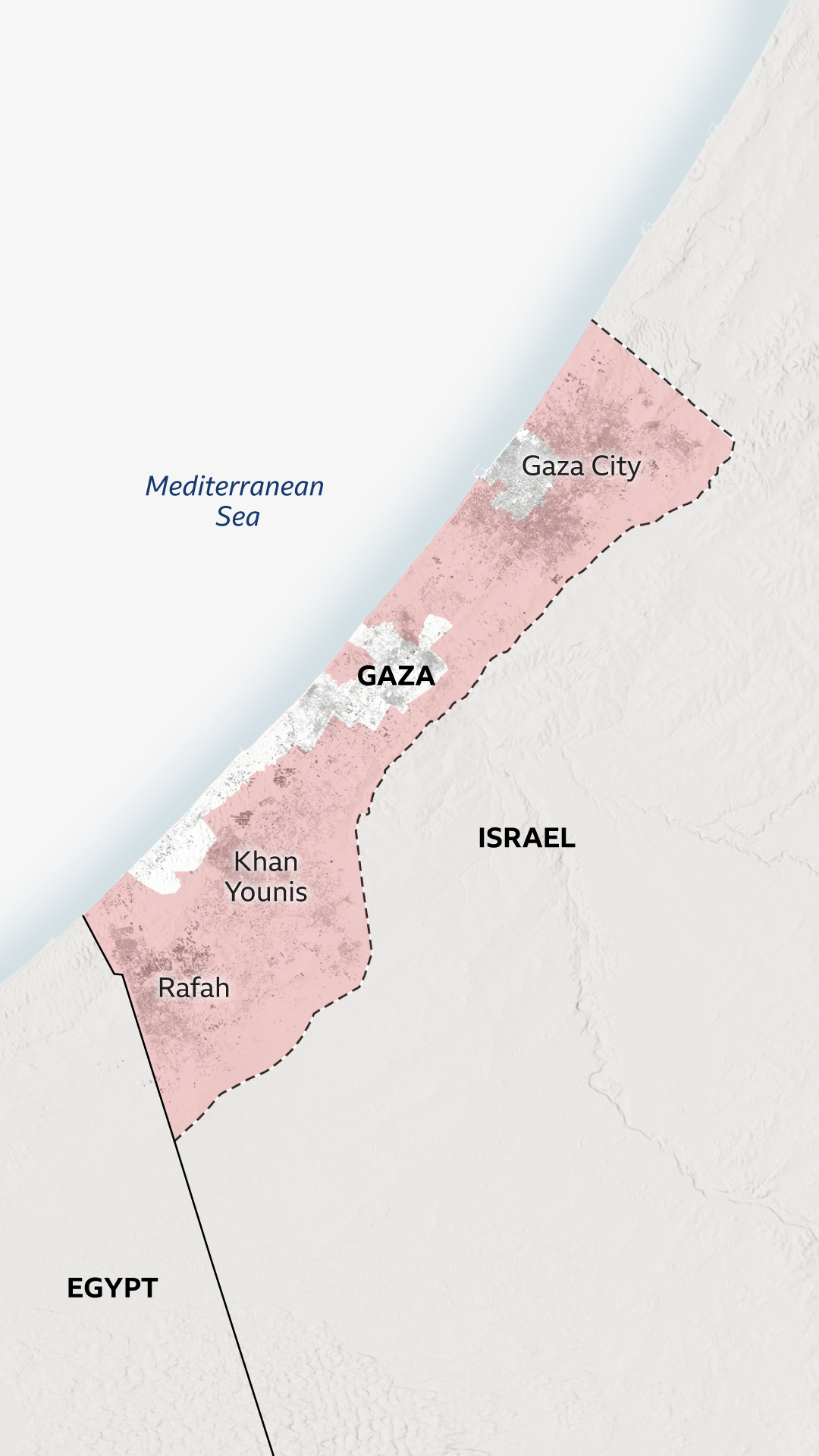

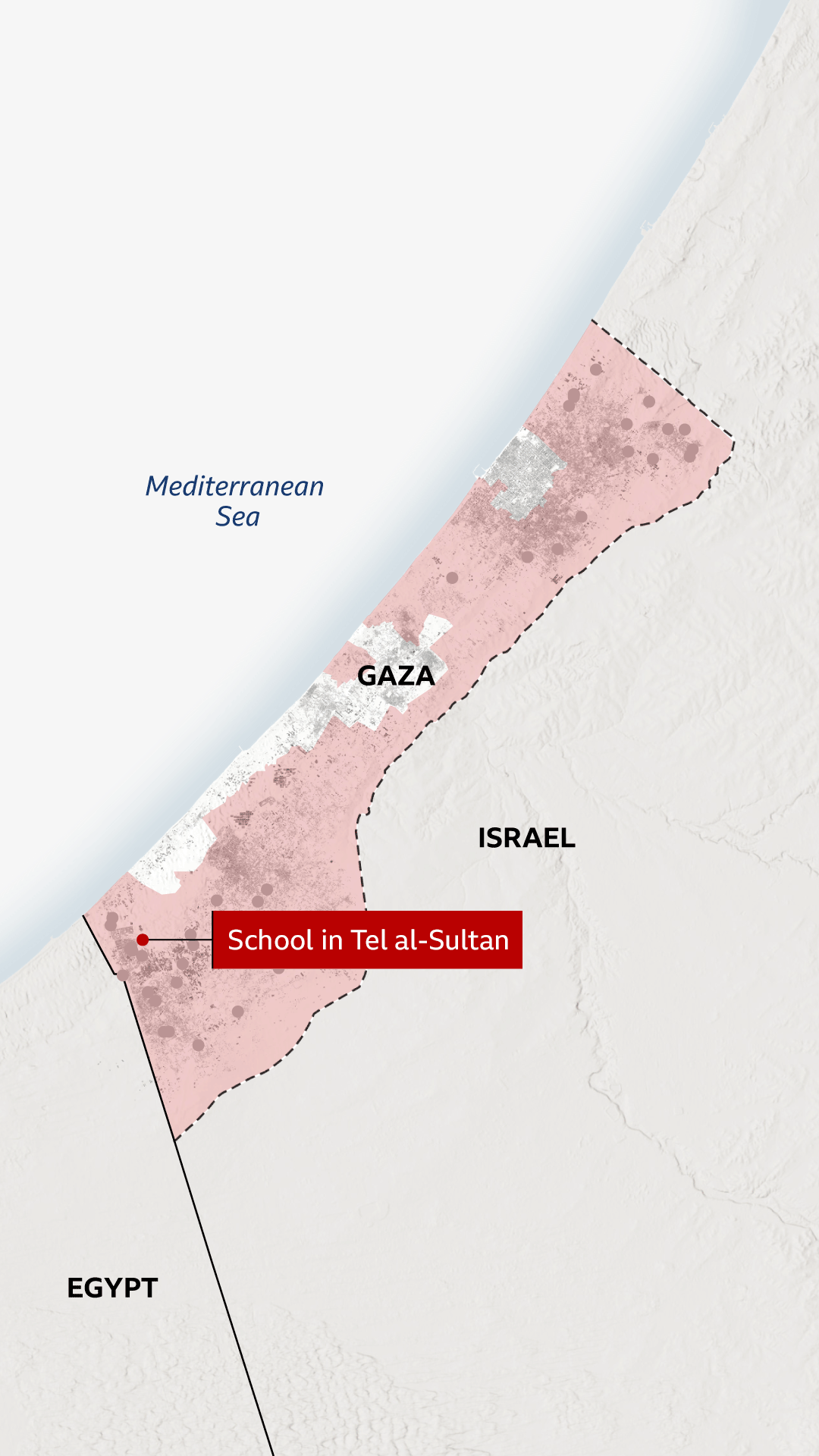
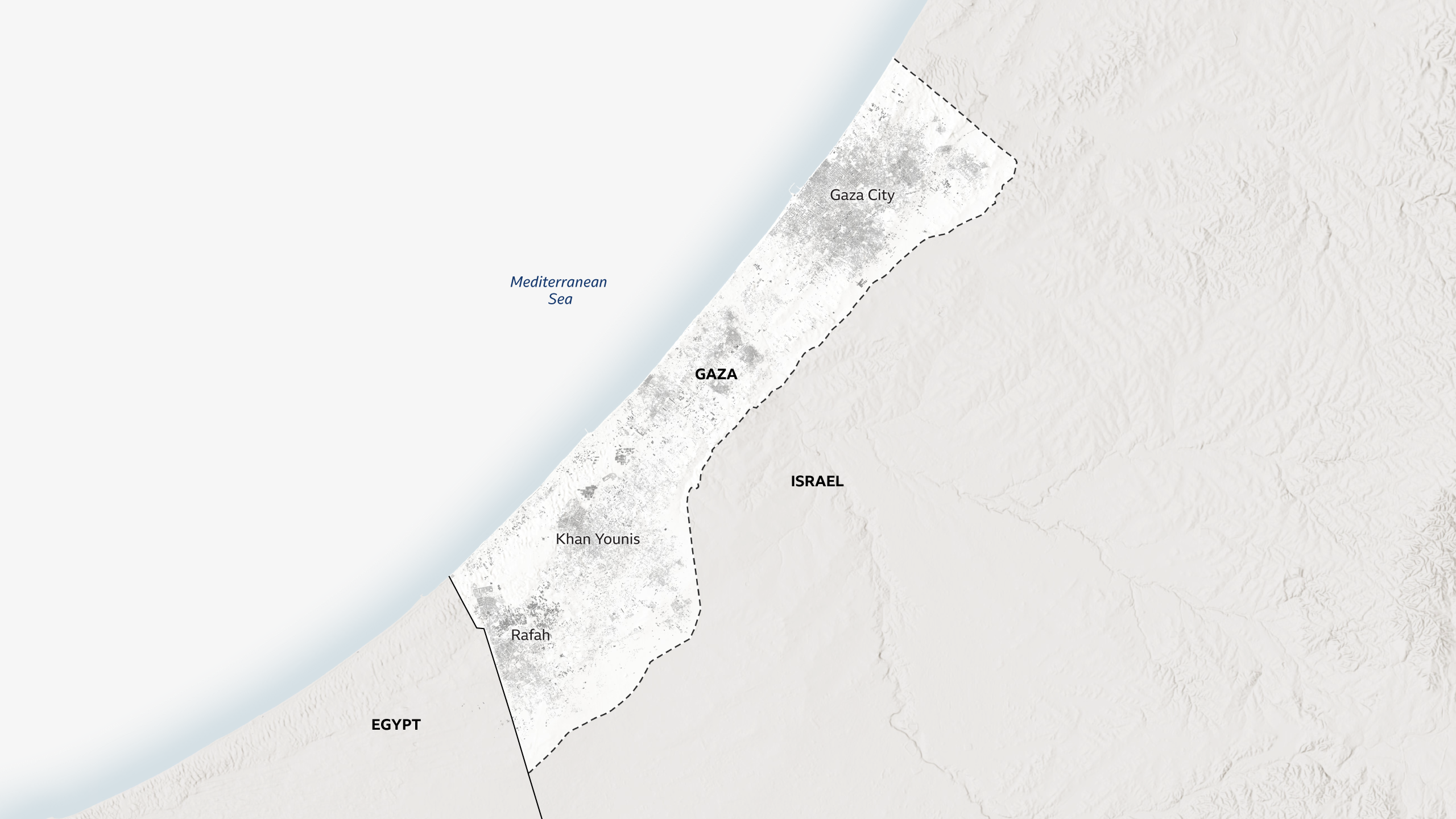
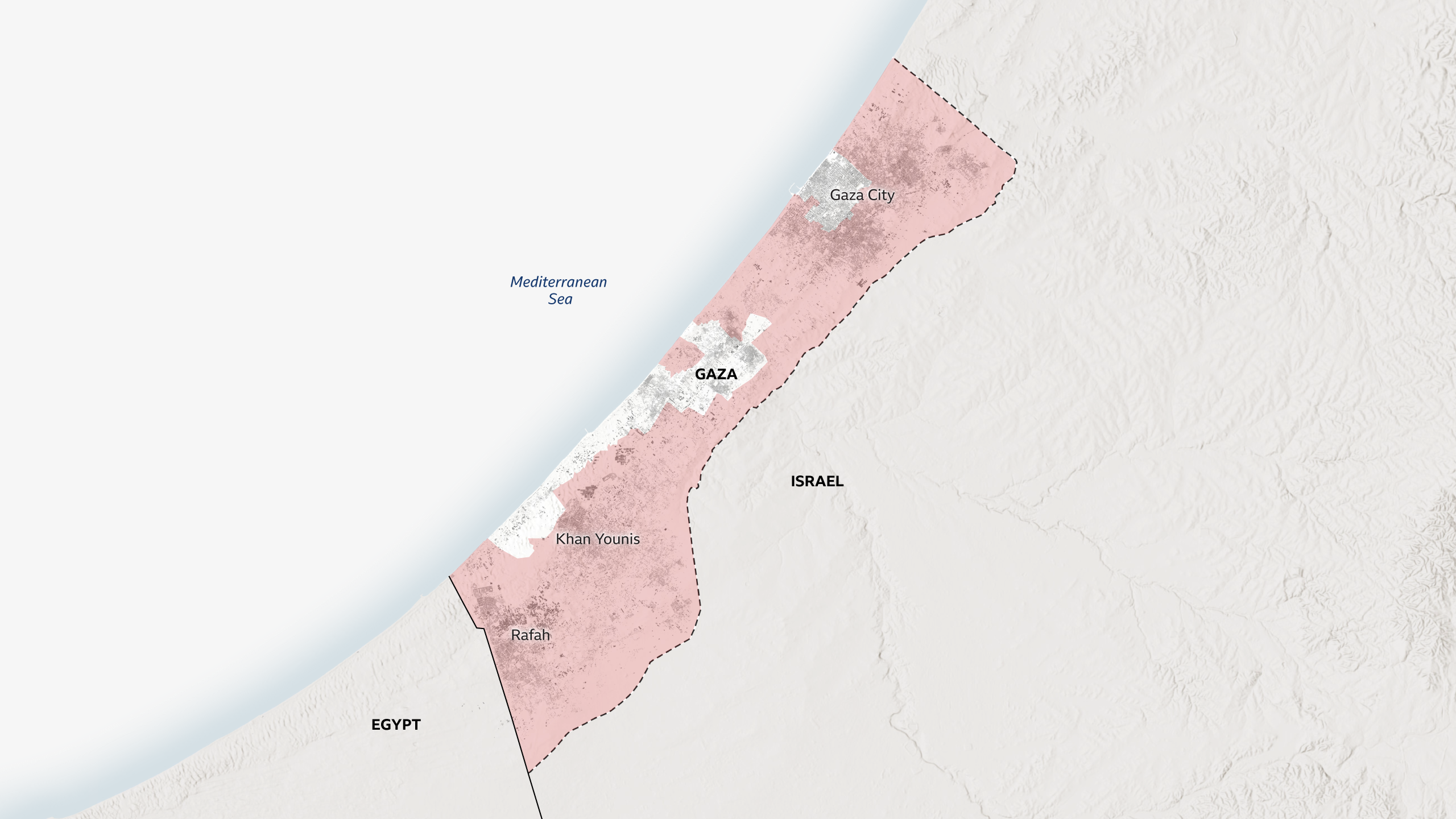
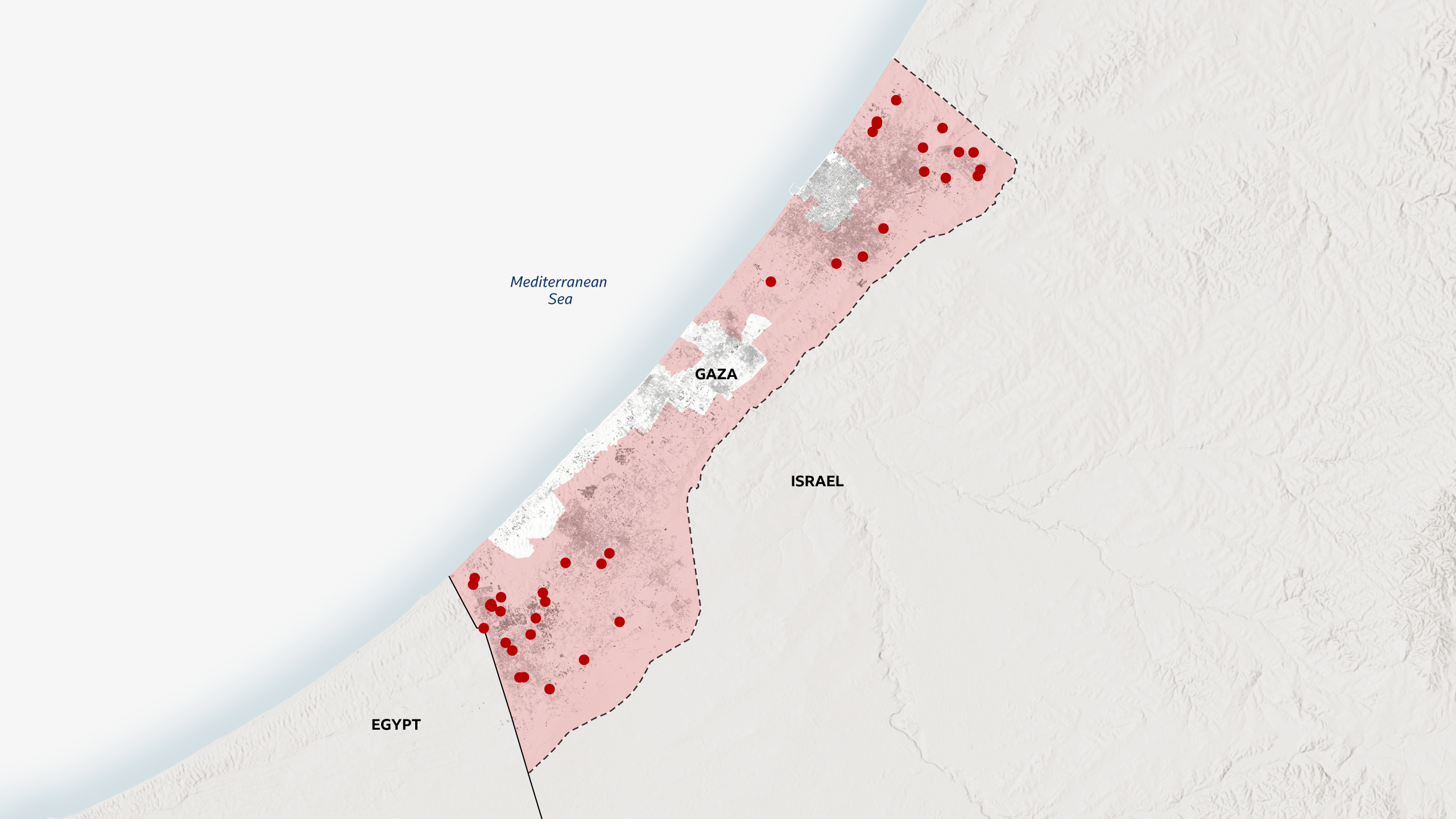
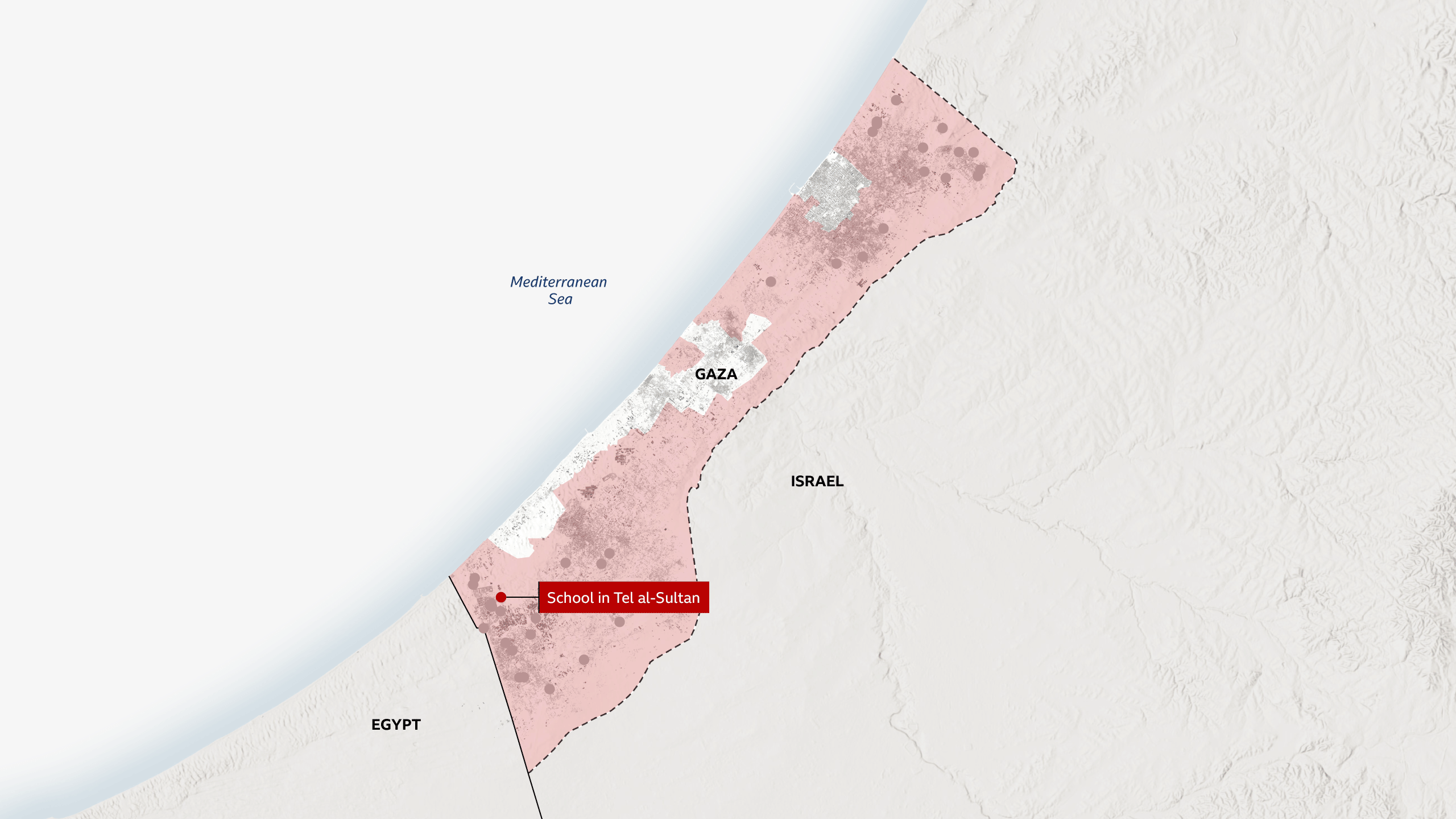
Tel al-Sultan was one of Rafah city's most vibrant neighbourhoods. Its densely packed streets were home to Rafah's only specialised maternity hospital and a centre caring for orphaned and abandoned children.
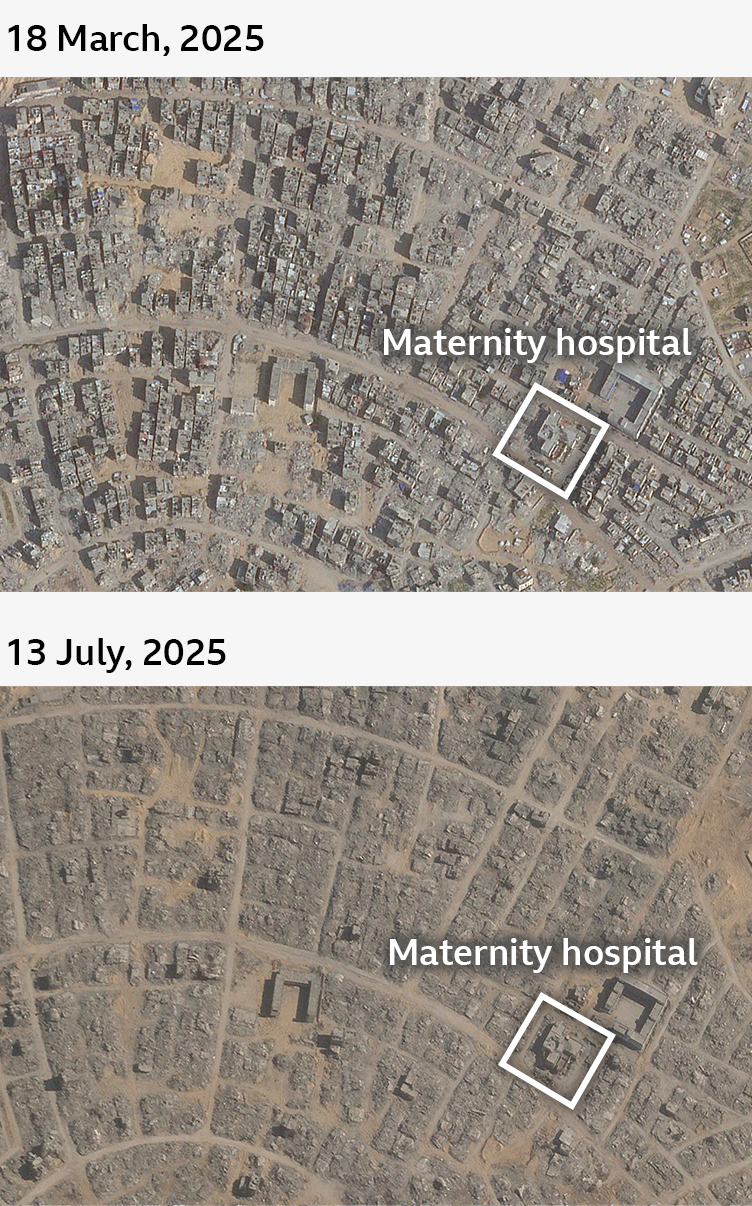
Satellite
images showed that much of the area had already been heavily damaged by
Israeli bombing and artillery fire, but dozens of buildings had
withstood the barrage.
But by 13 July the
destruction had escalated, with even the shells of damaged buildings
swept away and entire blocks torn to the ground. The hospital is one of a
handful of buildings left standing.
Similarly, demolitions
are now under way in the adjacent Saudi neighbourhood - once home to the
city's largest mosque and several schools.
One verified clip showed
a tank moving along a street in Rafah while a digger works by the side
of the road.
Israeli
demolitions are also visible in other parts of the strip which appear
to have avoided heavy damage during earlier bombardments.
The farming town of
Khuza'a is located about 1.5km (0.9 miles) from the Israeli border.
Before the war the town
had a population of 11,000 people and was known for its fertile
farmlands and crops such as tomatoes, wheat and olives.


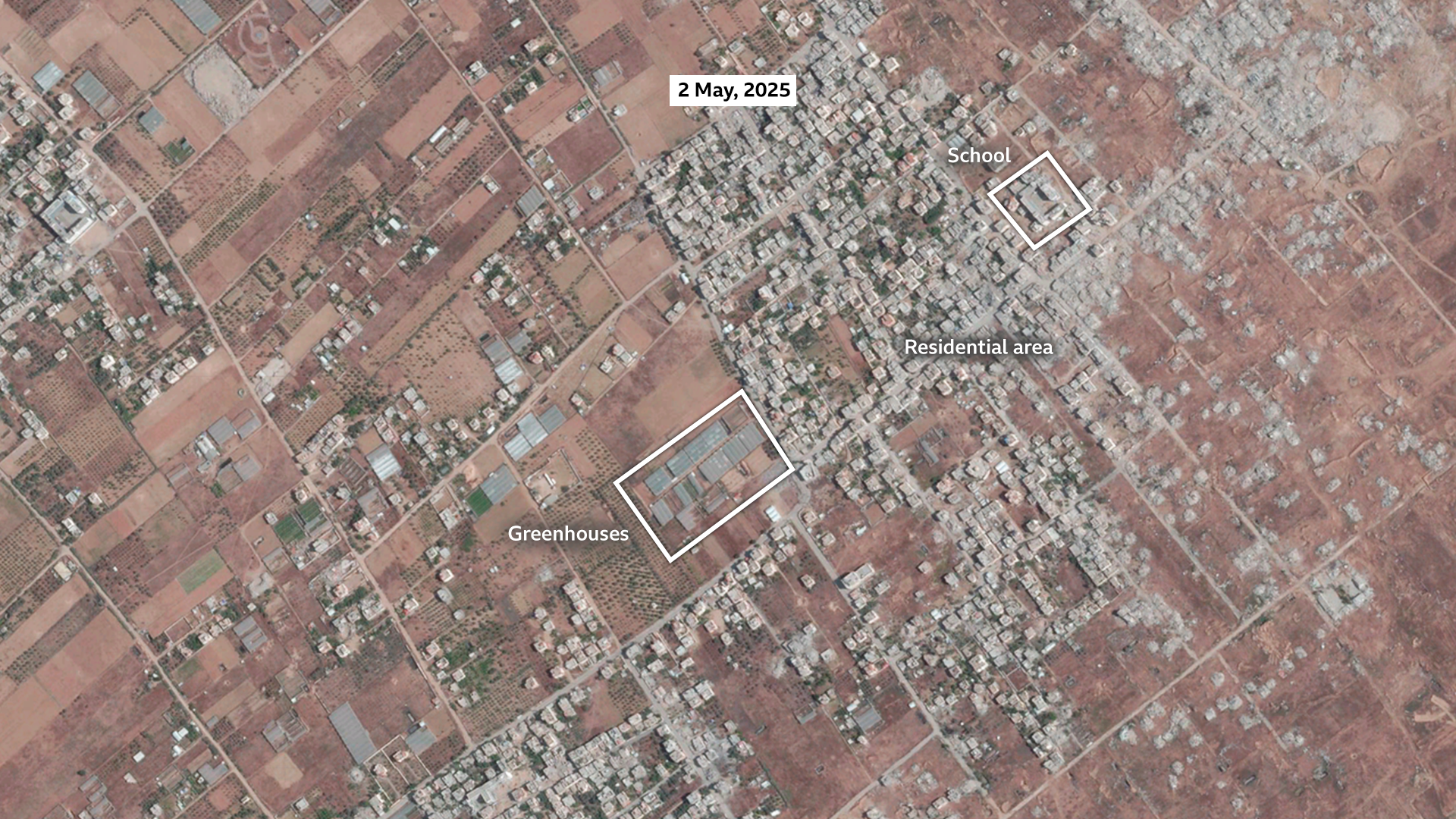
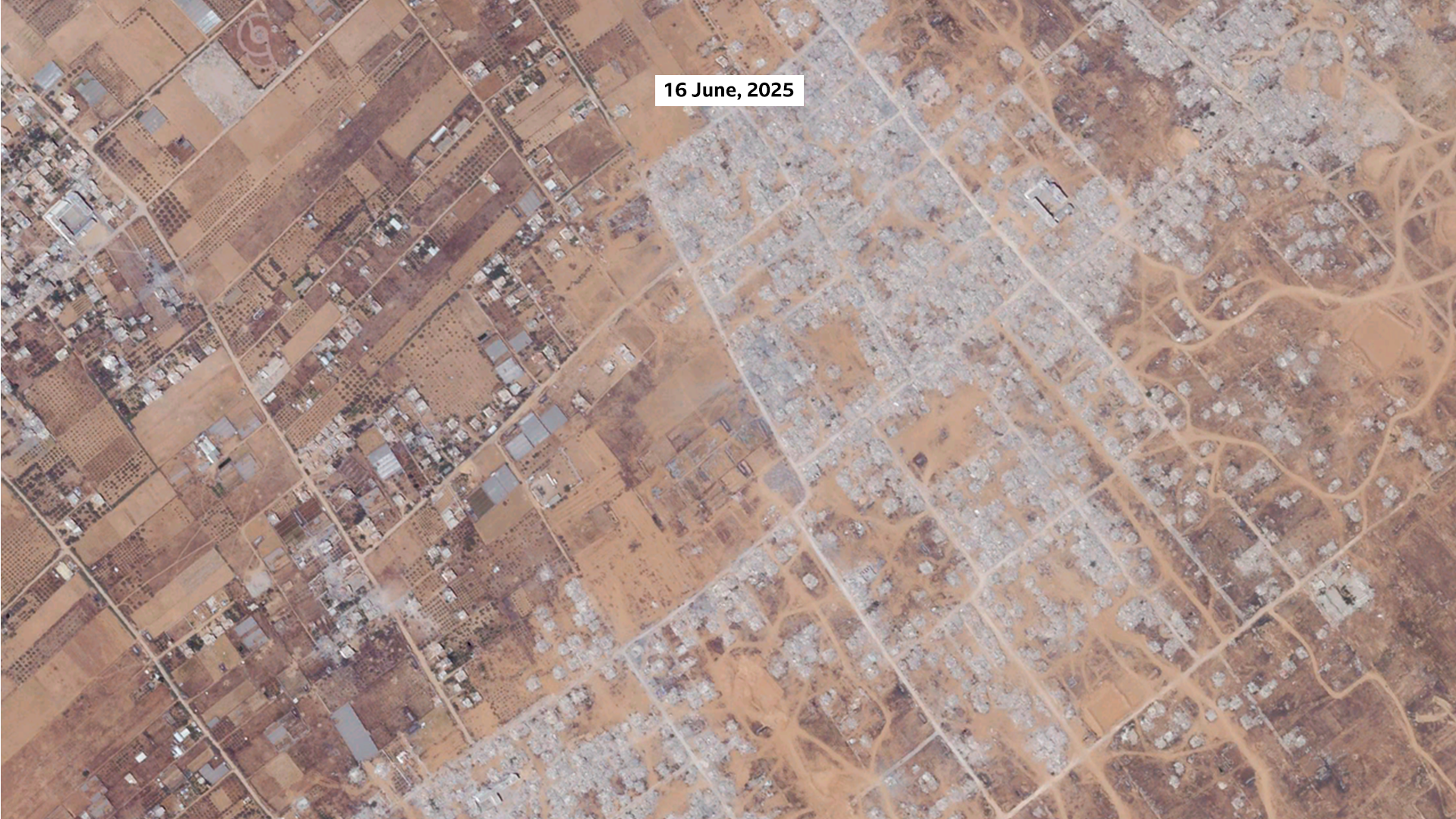
The IDF says it demolished 1,200 buildings in Khuza'a, which it alleged were part of "terror infrastructures" run by Hamas.
A similar story emerges
in the nearby town of Abasan al-Kabira, where about 27,000 people lived
before the war. Photos taken on 31 May and 8 July indicate that an
extensive area was swept away in just 38 days.
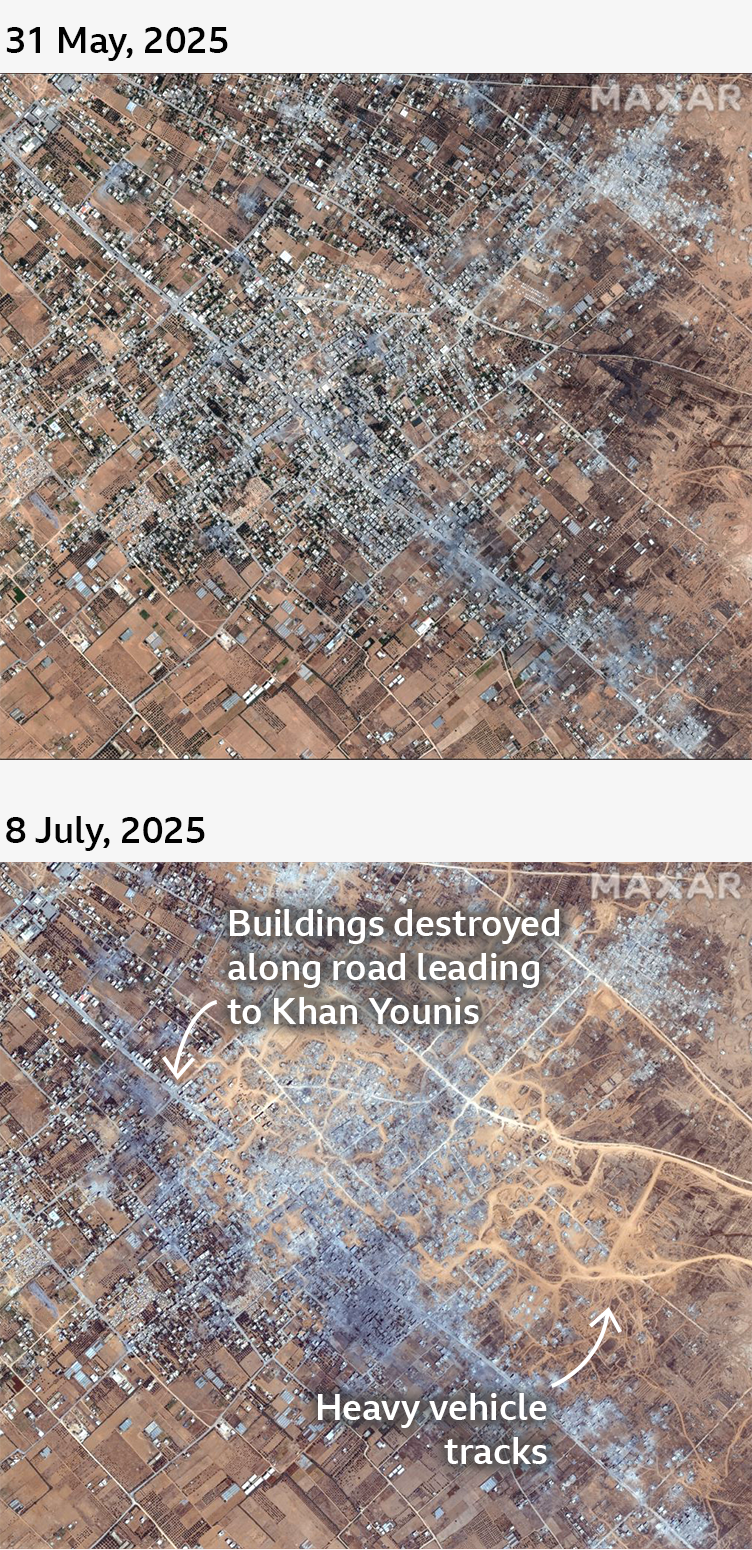
Israel
has created extensive "security zones" and corridors separating parts
of Gaza, and has destroyed large numbers of buildings along and near
these routes. Its latest corridor separates western from eastern Khan
Younis, including Khuza'a and Abasan al-Kabira.
Also since early in the
war analysts have suggested that Israel has been attempting to create
deep "buffer zones" by destroying buildings near to the border, but some
of the areas flattened recently are deep into Gaza.
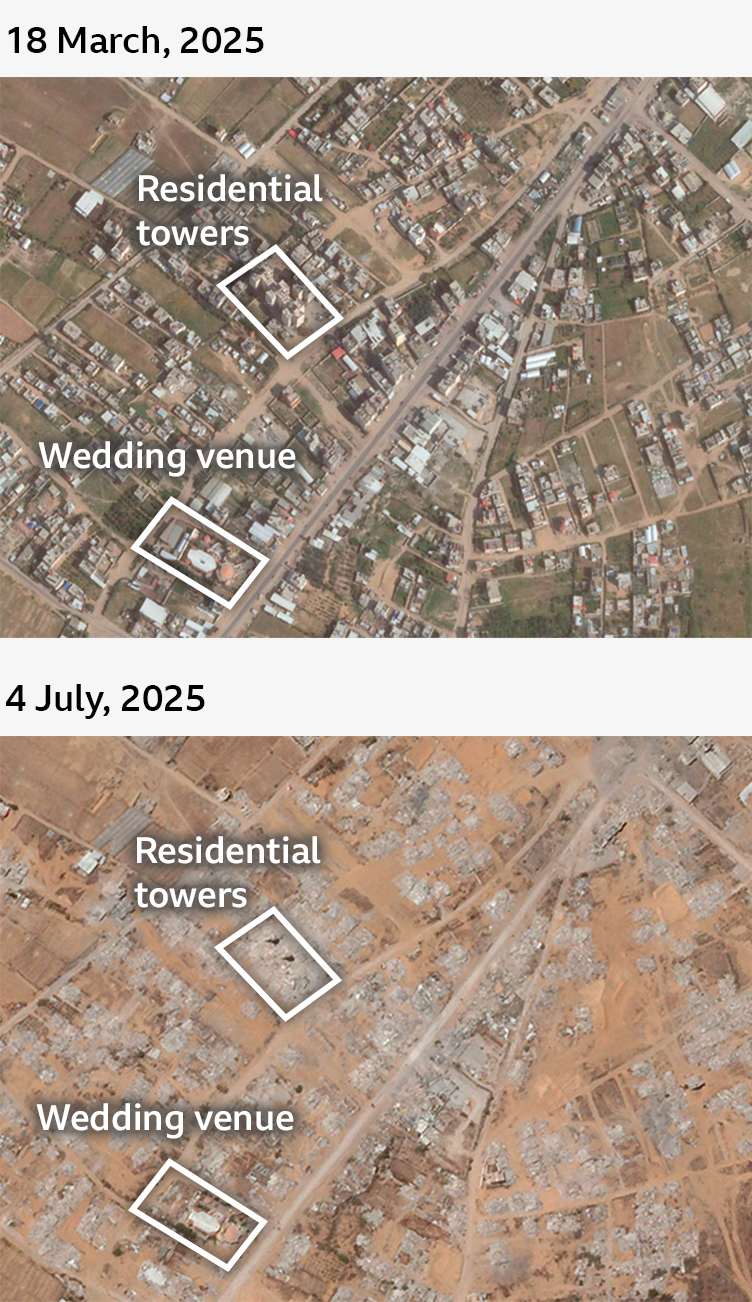
In Qizan Abu Rashwan -
an agricultural settlement about 7km from the Israeli border - virtually
every structure left standing has been demolished since 17 May. One
video we verified showed a controlled explosion levelling a cluster of
tower blocks.
BBC Verify presented the
IDF with a list of places in which we documented demolitions and asked
it to provide specific military justifications. It did not do so.
"As has been widely
documented, Hamas and other terrorist organizations conceal military
assets in densely populated civilian areas," an IDF spokesperson said.
"The IDF identifies and destroys terrorist infrastructure located, among
other places, within buildings in these areas."
Several human rights lawyers who spoke to BBC Verify suggested the campaign could amount to war crimes.
Eitan Diamond - a senior
legal expert at the Diakonia International Humanitarian Law Centre in
Jerusalem - said there was little justification under the Fourth Geneva
Convention, the document which generally covers the protection of
civilians in wartime.
"International
humanitarian law prohibits such controlled destruction of civilian
property during armed conflict, except under narrow conditions of
absolute military operational necessity," Mr Diamond said.
"Destruction of property
because of concerns or speculations about its possible future use (for
example, that it will be used to launch attacks in the future) falls
well outside this exception."
Professor Janina Dill,
co-director of Oxford Institute for Ethics, Law & Armed Conflict,
said an occupying power must administer a region for the benefit of the
population - which she said was "incompatible with a military approach
that simply makes the territory uninhabitable and leaves nothing
standing".
But some analysts have sought to defend the IDF’s campaign.
Many of the buildings
the IDF has demolished had already been left in ruins by shelling and
air strikes, said Prof Eitan Shamir, director of the BESA Center For
Strategic Studies in Israel and an ex-official with the Ministry of
Strategic Affairs. He told BBC Verify they posed a safety risk for
returning civilians, especially "during winter rains when they are more
likely to collapse".
Prof Shamir also alluded to tactical concerns.
"The area is a combat
zone," he said. "Even when a building has been entered and cleared by
the IDF, once the Israelis exit it, the terrorists often return to plant
bombs or hide inside to shoot at them."
There
is no sign of a let-up in the pace of the demolitions. Israeli media
reported last week that the IDF had received dozens of D9 bulldozers
from the US, which had been suspended under the Biden administration.
And BBC Verify
identified dozens of adverts posted to Israeli Facebook groups which
were offering work in Gaza to demolition contractors. The majority of
the posts have been shared by recruiters since May.

Many
of the ads specify areas of Gaza where the work will occur, such as
"the Philadelphi Corridor" and "the Morag Axis" - both areas controlled
by the IDF.
When approached for
comment by BBC Verify, one contractor replied: "Go [expletive] yourself,
you and Gaza."

One
analyst - Adil Haque of Rutgers Law School - suggested that the IDF’s
demolitions could be seeking to create a "security zone" that it could
"permanently control".
Other analysts say the
demolitions could be clearing the ground to develop the proposed
"humanitarian city" in Rafah. Efraim Inbar - President of the Jerusalem
Institute for Strategy and Security - suggested they could be seeking to
encourage Palestinians to leave the strip entirely by increasing "the
strong desire to emigrate".
Israeli Prime Minister
Benjamin Netanyahu previously told a group of MPs in a closed-door
meeting widely reported in Israeli media that the IDF was "destroying
more and more homes" leaving Palestinians with "nowhere to return to".
For Gazans, the devastation has been intense.
Moataz Yousef Ahmed
Al-Absi from Tel al-Sultan said his home had been swept away.
"I had just moved into
my home a year before the war started, and I was incredibly happy with
it, holding high hopes for my future. Now, it's been completely
destroyed," he said.
"After losing everything, I no longer have a home or a shelter."
No comments:
Post a Comment