The precedent set by Russia’s restrained response to Ukraine obtaining the F-16s, which could also be nuclear-equipped, suggests that tensions with the US will remain manageable if Ukraine obtains the Tomahawks too due to the modus vivendi that’s arguably been in place for managing them.
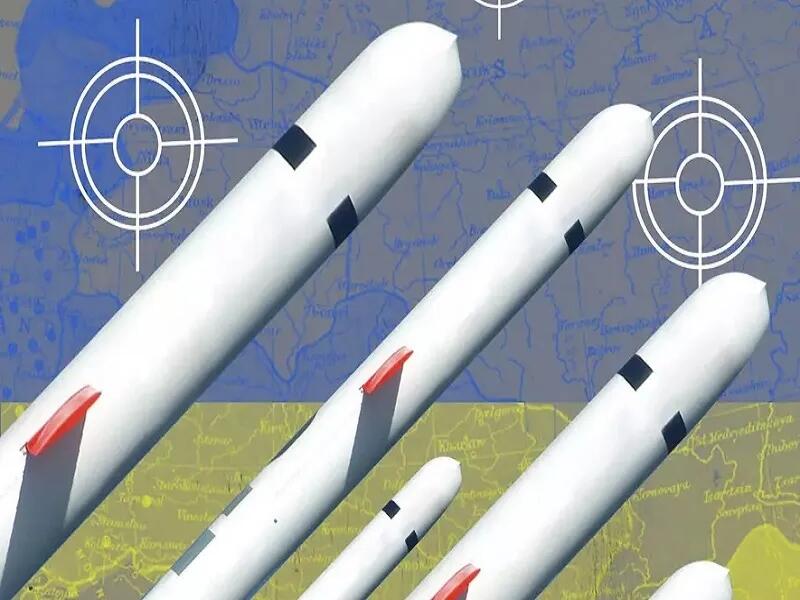
Authored by Andrew Korybko: The latest talk about the US transferring longer-range Tomahawk cruise missiles to Ukraine, which Putin said earlier this month could only be used with US military personnel’s direct involvement, has prompted concerns about a potentially uncontrollable escalation spiral. Russian Deputy Foreign Minister Sergey Ryabkov assessed that such a development would lead to “a significant change in the situation” but nonetheless reaffirmed that it wouldn’t prevent Russia from achieving its goals in the special operation.
Ukraine’s explicitly stated goal in obtaining these arms is to “pressure” Russia into freezing the Line of Contact without any concessions from Kiev, which would essentially amount to Moscow conceding on its aforesaid goals since none would be achieved in full should that happen, ergo why it hasn’t agreed. In pursuit of that end, Ukraine threatened to cause a blackout in the Russian capital, which would likely be accompanied by more attacks against civilian and military logistics targets far behind the frontlines.
Some are therefore worried that that Russian-US tensions could spiral out of control, especially after Kremlin spokesman Dmitry Peskov noted that the Tomahawks can be nuclear-equipped, but the precedent set by the F-16s suggests that they’ll remain manageable.
Putin himself warned in early 2024 that they too could be nuclear-equipped, yet Russia ultimately didn’t treat their use as a potential nuclear first-strike. This is arguably due to the modus vivendi that was described here in late 2024:
“[Comparatively pragmatic US ‘deep state’ figures] who still call the shots always signal their escalatory intentions far in advance so that Russia could prepare itself and thus be less likely to ‘overreact’ in some way that risks World War III. Likewise, Russia continues restraining itself from replicating the US’ ‘shock-and-awe’ campaign in order to reduce the likelihood of the West ‘overreacting’ by directly intervening in the conflict to salvage their geopolitical project and thus risking World War III.
It can only be speculated whether this interplay is due to each’s permanent military, intelligence, and diplomatic bureaucracies (‘deep state’) behaving responsibly on their own considering the enormity of what’s at stake or if it’s the result of a ‘gentlemen’s agreement’. Whatever the truth may be, the aforesaid model accounts for the unexpected moves or lack thereof from each, which are the US correspondingly telegraphing its escalatory intentions and Russia never seriously escalating in kind.”
The latest talk about the US transferring longer-range Tomahawk cruise missiles to Ukraine fits the pattern of leaks serving to tip Russia off about this preplanned escalation so it can prepare its responses in advance. Time and again, Putin has exercised an almost saintly degree of self-restraint in refusing to escalate, whether symmetrically or asymmetrically. Readers can learn more about these precedents from the eight analyses enumerated in the one from late 2024 that was hyperlinked to above.
The only exception was him authorizing the use of the Oreshniks in November after the US and UK let Ukraine use their long-range missiles inside of Russia, obviously through the direct involvement of their military personnel, which he might repeat if Ukraine obtains the Tomahawks. He didn’t authorize them after Ukraine’s strategic drone strikes against parts of Russia’s nuclear triad in June that were much more provocative, however, which might have been due to his diplomatic calculations vis-à-vis Trump.
Whether one agrees with the policy or not, it’s arguably the case that Putin wants to avoid doing anything that could reaffirm Trump’s perception (carefully crafted by the warmongers around him like Zelensky and Lindsey Graham) that Russia is escalating, thus falsely justifying “reciprocal US escalations”. So long as he continues formulating policy based on this calculation, and there’s no credible indication thus far that it’s changed, then any escalation over the Tomahawks will likely remain manageable.
***
Military Analyst Warns US Doesn't Have Enough Tomahawks To Send To Ukraine
By Tyler Durden: Military analysts have told the Financial Times that even if President Trump decides to approve US Tomahawk transfers to Ukraine, this will have limited impact on the trajectory of the war, given especially that a mere dozens will be available to send.
The report also suggests that the US is involved in too many conflicts at once, and that Pentagon stockpiles of advanced weapons are being depleted.

Trump started this week by issuing more ambiguous and vague statements on the Tomahawk issue. On Monday he had said Tomahawks are a "very offensive weapon," noting, "honestly, Russia does not need that." He hinted he 'might' pull the trigger on this escalation, amid Moscow warnings and threats.
FT found that out of over 4,000 Tomahawk missiles in the US arsenal, only "a few" could be given to Ukraine:
Mark Cancian, a former Pentagon official now at the Center for Strategic and International Studies think-tank, estimated in a recent war game that the US had 4,150 Tomahawks in total. However, the US would probably be able to supply only a few to Ukraine.
This is in light of the fact that, out of the 200 the Pentagon has procured since 2022, it has already fired more than 120, according to defense experts. The defense department has requested funding for only 57 more Tomahawks in its 2026 budget. Washington would probably also need Tomahawks for any strike on Venezuelan soil.
Again, this reference to Venezuela is interesting, at a moment of unprecedented American military build-up in the southern Caribbean near the Latin American country's coast. The US has also been expending its missiles on defending Israel, which happened at an increased pace especially over the past year.
Another Washington-based US military analyst put a number to how many Tomahawks American could afford to hand over:
Stacie Pettyjohn, director of the defense program at the Center for a New American Security think-tank, said Washington could spare some 20 to 50 Tomahawks for Ukraine, “which will not decisively shift the dynamics of the war”.
While the long-range missiles could complement Ukraine’s own long-range attack drones and cruise missiles “in large complex salvos to greater effect”, they would “still will be a very limited capability . . . certainly not enough to enable sustained, deep attacks against Russia”, they added.
And of course, the understated if not unspoken part is that all of this risks WW3 with Russia, something that Trump has repeatedly and openly voiced that he wants to seek to avoid at all costs.
On Monday former Russian President Dmitry Medvedev issued a chilling response which spelled out that this "could end badly for everyone… most of all, for Trump himself," according to a translation of his Telegram post.
"It's been said a hundred times, in a manner understandable even to the star-spangled man, that it's impossible to distinguish a nuclear Tomahawk missile from a conventional one in flight," Medvedev, who serves as the Russian Security Council Deputy Chair, further noted.
No comments:
Post a Comment