
Written during the peak of Israel’s genocidal attacks on Gaza, El Akkad’s book is a kind of meditation on genocide that will have lasting significance. In the blurbs on the back of the book cover, it is described as “part elegy, part rallying cry” and “a landmark of truth telling and moral courage.”
Its impact may be greater because it avoids the detailed documentation of the atrocities and war crimes committed or the evidence of intent needed to meet the requirements of the United Nations genocide convention.
“This is not an account of [the] carnage,” El Akkad cautions early on. Rather it is “an account of a fracture, a breaking away from the notion that the polite, Western liberal ever stood for anything at all.”
It is also an “account of an ending,” he promises, “the moment millions of people looked at the West, the rules-based order, the shell of modern liberalism and the capitalistic thing it serves, and said: I want nothing to do with this.”
Journalist turned novelist
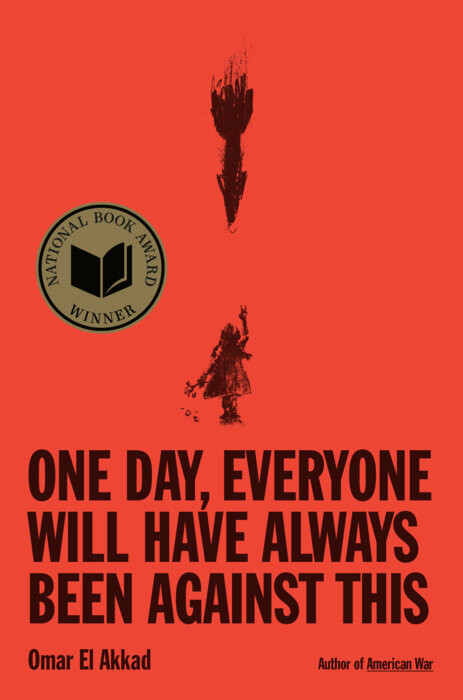
A challenge to the fundamental liberal claim of benevolent Western empires may be the central contribution of El Akkad’s book. Its dissection of Western corporate journalism very much resembles the Palestinian poet and journalist Mohammed El-Kurd’s Perfect Victims (2025).
The very title of the book may be its most poignant and resonating insight.
One Day, Everyone Will Have Always Been Against This implies the inevitability of a universal recognition that Israel committed a genocide against the Palestinian people with the full support of the US and European states. And yet that day tragically will only come in the aftermath of the deaths, injuries and traumas inflicted on millions of Palestinians.
The title also hints at hypocrisy: The idea of “will have always been against” is emphatically not true since so many Western government officials and politicians, civil society organizations and others defended Israel and justified its atrocities at the time. The Palestinian narrative will inevitably win out, as the title implies and as many of us believe. It will become dominant, but it will still take time.
El Akkad is a journalist turned novelist who was born in Egypt, raised in Qatar and educated at the university level in Canada, where he later reported for The Globe and Mail covering the US war in Afghanistan as a war correspondent, the Arab Spring, and the US military trials of prisoners held in Guantanamo Bay. He moved to the United States, settling in the Portland, Oregon area and became better known as a novelist. His first novel, American War, was published in 2017.
His newspaper experience provides insights into the many aspects of Western journalism that come under examination in One Day. He singles out US President Joe Biden’s lies about seeing photos of beheaded babies in the aftermath of Hamas’ 7 October 2023 attack as an example of how Western journalism helps promote myths. Although news accounts eventually debunked that Biden had seen any such thing, the damage was done.
“Beheaded babies” played the role that nonexistent weapons of mass destruction and the oft-repeated “mushroom cloud” played in justifying the US invasion of Iraq. What the enemy “is believed capable of doing” is more important than what it actually did, as El Akkad puts it. For the corporate liberal media, so-called objective journalism is simply reporting what the president said, not the lie that was spread or what agenda was served by spreading it.
Also analyzed by El Akkad is the use of passive voice to obfuscate who is doing what to whom, something employed most infamously in reporting on Israel’s killing of civilians. El Akkad notes a particularly egregious example in a headline from The Guardian: “Palestinian journalist hit in head by bullet during raid on terror suspect’s home.”
El Akkad calls this out as the “heightened derangement of language for the purpose of sanitizing violence.” Yet another example is The Guardian’s coverage of Israeli soldiers firing on Palestinians seeking food, reduced to the absurd description of “food aid-related deaths.”
Because of this deliberately distorted coverage, El Akkad writes, “Palestinian reporters are in effect the world’s sole source of information about the reality of the obliteration of Gaza, the plain truth of the horror in the face of a mass propagandist effort.”
Singling out Western liberalism
Why single out Western liberalism and not Western conservatism? Liberalism’s longstanding support for Israel’s system of apartheid, occupation and ethnic cleansing of Palestinian Arabs is, of course, one reason.
But, according to El Akkad, so is liberalism’s complicity in “the Vietnamese and Cambodian and Laotian villages turned to ash,” as well as “the nice clean beach north of Tel Aviv that sits atop a mass grave” – a reference to the massacre of hundreds of people by Zionist forces in the Palestinian village of Tantura in May 1948.
The material support given by the Democratic Party and its leader Joe Biden to Israel’s ethnic cleansing and its genocidal bombing is no less morally reprehensible than Republican politician Nikki Haley signing her name on an Israeli bomb before it was dropped on Gaza.
“In times like these, one remarkable difference between the modern Western conservative and their liberal counterpart is that the former will gleefully sign their name on the side of the bomb while the latter will just sheepishly initial it,” El Akkad observes.
“And yet,” the author concludes, “against all this, one day things will change.”
The hopeful anticipation that one day, everyone will have always been against this is indeed visible in the ongoing mass movement that has seen millions of people in the West protest against the genocide.
This movement has included student encampments at universities despite massive state repression, closing down ports to prevent arms shipments to Israel and the activation of a multitude of boycott, divestment and sanctions campaigns.
The very fact that this book won the National Book Award for nonfiction in 2025 is another sign of the changing narrative.
And yet, it still needs to be said that without changing the structures behind this genocide and all forms of oppression, nothing is permanent or even guaranteed. Once-suppressed narratives can become ascendant and even dominant.
Whether they remain that way depends on dismantling the systemic features of the “capitalistic thing” that El Akkad rightly identifies as the source of the problem.
Rod Such is the author of Digging Deeper into the Meaning of Palestine (Changemaker Publications, 2025).
No comments:
Post a Comment