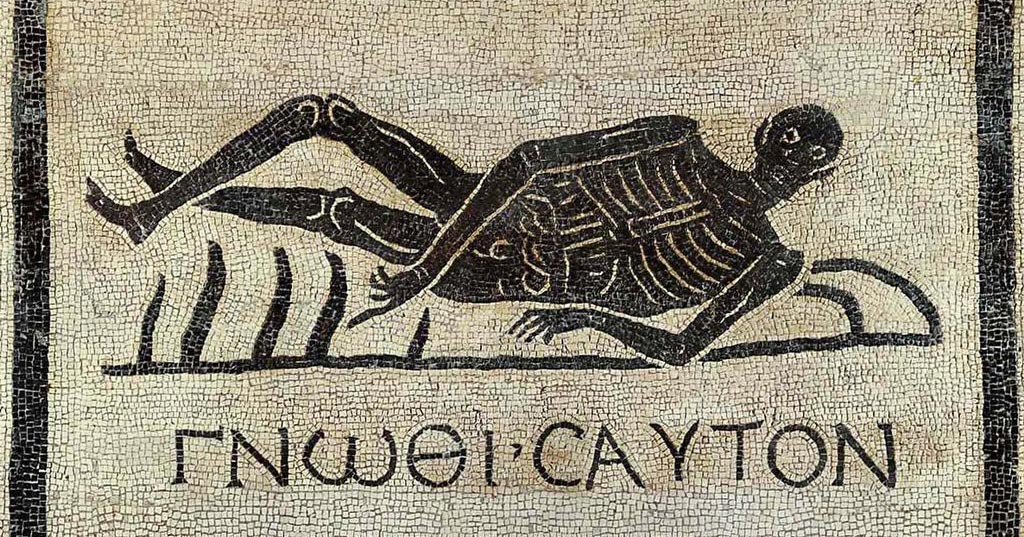
In Ovid’s Metamorphoses, the prophet Tiresias declares that the infant Narcissus would live to an old age “if he would not know himself {si se non noverit}.” That prophecy contradicts famous ancient Greek wisdom of the Delphic Oracle: “know yourself {γνῶθι σεαυτόν}.” To the ancient Greeks, γνῶθι σεαυτόν meant know your place with respect to your familial and civic status and dominant ethics.[1] As a double transsexual, Tiresias knew that women get more pleasure from sex than men do. Moreover, men are expected to give up their lives for women, accept being criminalized in relation to women, endure risks of being cuckolded, and tolerate being forced into financial fatherhood. Anti-men gender injustices can motivate men to structure their relationships with women so as to protect themselves. But the anonymous twelfth-century lai Narcissus and Danae {Narcisus et Dané} and Jean Renart’s early thirteenth-century Lai of the Reflection {Lai de l’Ombre} show naturalized gods of gynocentrism putting men into their gynocentric place of self-abasing love for women.