Six months into President Donald Trump’s war of aggression
against the Islamic Republic of Iran, the United States is confronting a
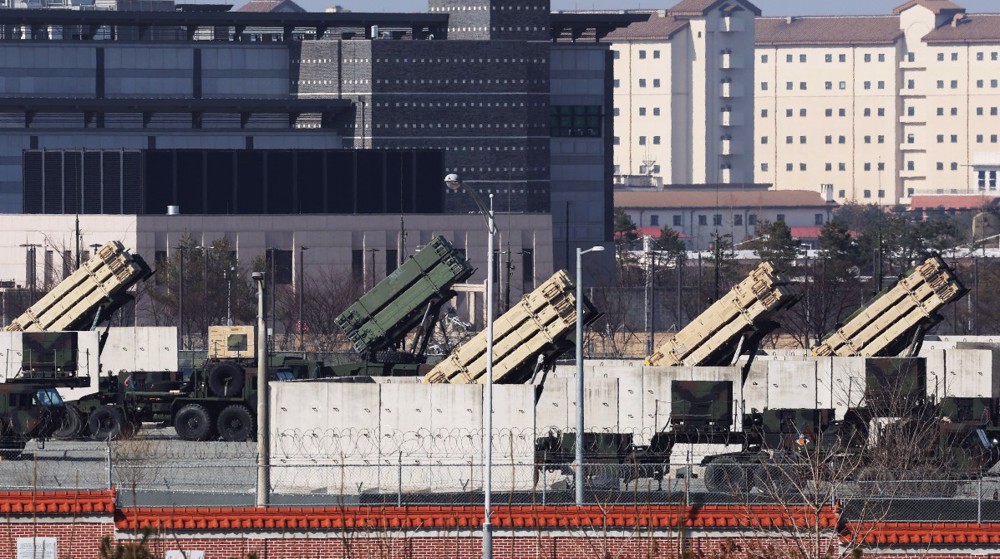
“beyond critical” shortage of Patriot missile interceptors in Europe,
according to a US defence official and a NATO official who spoke on
condition of anonymity.

In the event of a sustained strike on a headquarters or power plant, the official warned, NATO could be forced “to take punch after punch in the mouth."
The Pentagon and NATO spokesmen issued the usual denials. Army Col. Martin O’Donnell claimed it was “simply not the case” that Patriot numbers were critical and insisted the alliance could still “block punches.” Pentagon spokesman Sean Parnell called shortage reports “false” and boasted of a “deep, ready arsenal.” Those statements ring hollow against the numbers.
Analysts at the Center for Strategic and International Studies estimate the Iran war has consumed roughly 65 percent of the US Patriot inventory, about 1,500 of 2,330 interceptors. Transfers to the Kiev regime had already drawn down stocks; the war Trump launched proved the tipping point. Production this year is expected to yield only about 600 more missiles. A German plant is slated to open next month, but deliveries will not arrive in meaningful numbers until next year. Some European governments now sit with costly Patriot batteries and almost no ammunition to fire from them.
Iranian drones and missiles , far cheaper to produce than the multimillion-dollar interceptors fired against them, have forced the United States and its regional clients to expend munitions at an unsustainable rate. Some of those Iranian strikes have killed and wounded American troops stationed on foreign soil. Washington’s own officials now concede that Europe lacks enough Patriots to stop a sustained ballistic attack and would struggle even against a single incoming missile.
The same officials acknowledge critical shortages of ATACMS as well. European alternatives such as the French-Italian SAMP/T have shorter range and remain largely untested in high-intensity combat. Warships can provide some coverage, but they cannot be everywhere and themselves become targets.
Trump’s war, now approaching its six-month mark, was never going to be the quick, cost-free display of force advertised in Washington. Iranian armed forces have continued missile production under fire, conducted coordinated strikes on US facilities in Kuwait, Bahrain, Jordan and elsewhere, and imposed a price the American industrial base cannot easily replenish.
CIA Director John Ratcliffe’s recent trip to Moscow to warn Russia against exploiting the gap only highlights how exposed the United States has left its European dependents.
NATO officials project that Russia might be in a position to threaten
alliance territory by 2030, the same window in which Patriot stocks are
supposed to recover. Until then, the “uncomfortable truth,” as one
London think-tank analyst put it, is that Washington’s best remaining
air defense may be the constraints on its adversaries rather than its
own magazines.
The shortage is not an accident of logistics. It is the predictable
result of a war of choice against a country that refused to surrender
its sovereignty.
While the Pentagon spokesmen insist they can still strike “at the time and place of the President’s choosing,” the anonymous officials who actually manage inventories in Europe tell a different story: the arsenal that was supposed to underwrite American primacy is running dry, and NATO is left holding an empty magazine.
No comments:
Post a Comment